Performance Anxiety in Relationships: What’s Happening and How to Fix It
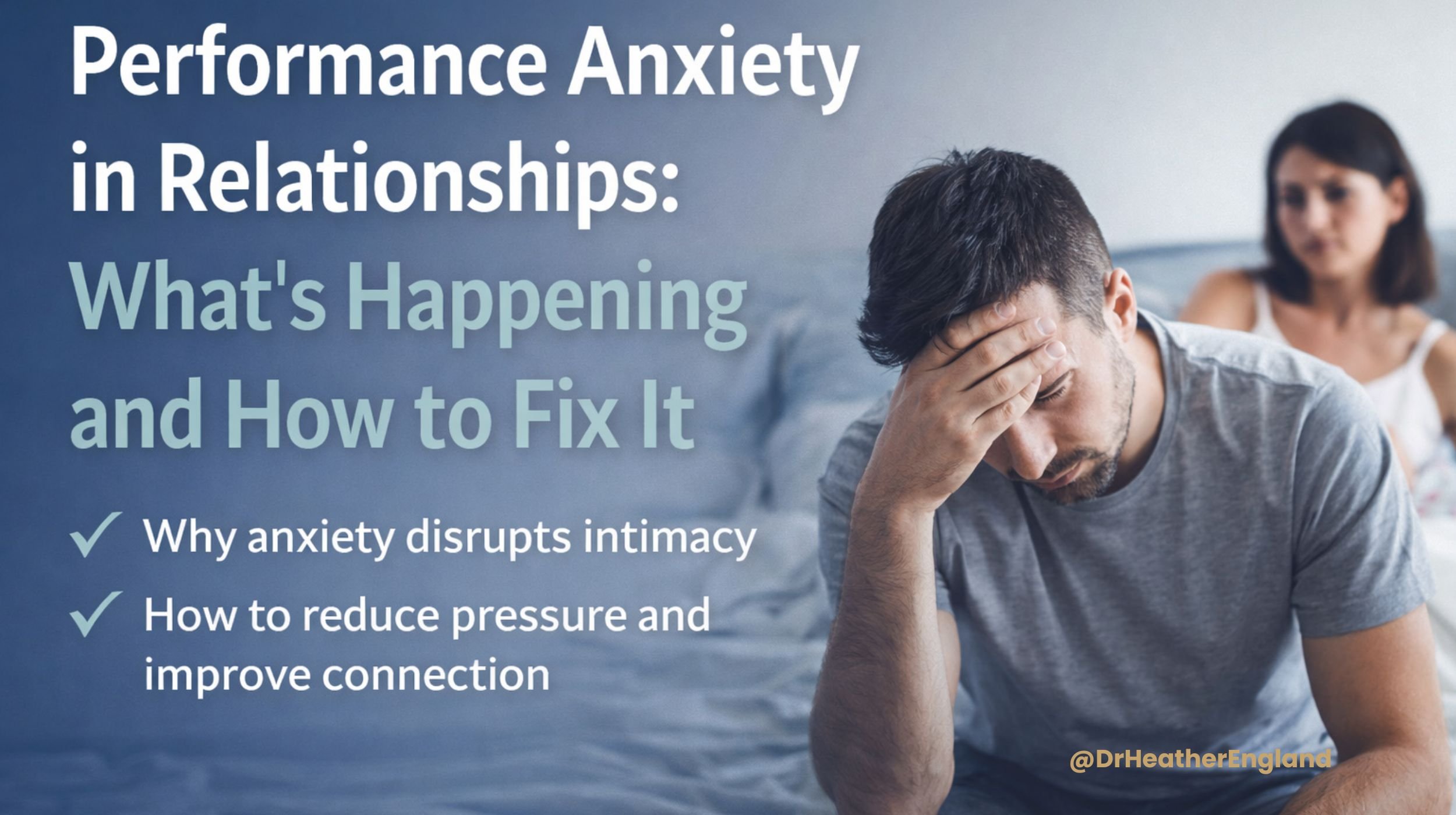
TL;DR
Performance anxiety in relationships isn’t just about sex—it’s about pressure.
When attention shifts from connection to performance, the body responds with tension instead of arousal. This can lead to erection problems, avoidance of intimacy, and growing distance between partners.
The solution isn’t trying harder. It’s understanding what’s happening and changing how you respond—individually and together.
What Is Performance Anxiety in a Relationship?
Performance anxiety in a relationship happens when pressure, self-monitoring, and fear of disappointment interfere with intimacy. It can affect erections, arousal, desire, emotional closeness, and how both partners experience sex.
For some couples, this shows up as erection loss. For others, it shows up as avoidance, tension, overthinking, or emotional withdrawal.
What makes it confusing is that attraction may still be there. Love may still be there. Desire may still be there.
But pressure changes the experience.
In simple terms: when pressure replaces presence, the body responds accordingly.
What Causes Performance Anxiety in Relationships?
Performance anxiety in relationships is caused by a shift from physical and emotional presence to self-monitoring. When someone starts evaluating their body, erection, performance, or partner’s reaction, the nervous system shifts into protection instead of arousal.
Common contributors include:
a previous difficult sexual experience
fear of losing an erection again
pressure to satisfy a partner
relationship tension or miscommunication
stress, fatigue, or life overload
unrealistic beliefs about masculinity, sex, or performance
What often starts as one bad moment can become a repeating pattern because the body learns to expect pressure.
Why This Feels So Confusing
For many couples, this starts unexpectedly.
Things were working before.
Attraction is still there.
The relationship may even feel strong in other ways.
And then something changes.
An erection doesn’t happen.
Or doesn’t last.
Or intimacy starts to feel tense instead of natural.
From there, it’s easy to draw conclusions:
Something is wrong.
Something has changed.
Someone is pulling away.
But often, what’s happening is not about attraction or desire.
It’s about pressure entering a moment that depends on ease, presence, and safety.
How Performance Anxiety Shows Up in Relationships
Performance anxiety in relationships often shows up as inconsistent erections, avoidance of intimacy, withdrawal during sex, tension between partners, and misinterpretation of what the problem means.
It can look like:
difficulty getting or keeping an erection
overthinking during sex
rushing or going through the motions
avoiding initiation
reduced desire because sex now feels pressured
a partner feeling rejected, undesired, or confused
more conflict or distance outside the bedroom
Over time, the problem is no longer just the sexual moment. It becomes the meaning both people attach to it.
Can Performance Anxiety Affect a Relationship?
Yes. Performance anxiety can affect a relationship by creating misunderstanding, emotional distance, shame, avoidance, and conflict around intimacy.
One partner may feel pressure and failure.
The other may feel hurt, rejected, or unattractive.
Neither person is necessarily wrong about what they are feeling. But both can misread what is actually happening.
This is where couples often get stuck:
one person fears the moment
the other fears what the moment means
both start reacting to the pattern
pressure increases the next time
That is why performance anxiety in relationships rarely stays limited to sex alone.
The Pattern Most Couples Get Stuck In
This is where things begin to escalate:
One partner feels pressure → the body doesn’t respond
The other partner feels confused or hurt → reacts
More pressure enters the situation → anxiety increases
Both partners begin anticipating the problem
No one is trying to create this dynamic.
But once the relationship starts organizing itself around the fear of the next experience, the pattern becomes harder to interrupt.
Why This Doesn’t Usually Resolve on Its Own
Most couples try reasonable things:
reassurance
trying to relax
pushing through
pretending it isn’t happening
avoiding sex altogether
But these approaches often don’t work for long.
Why? Because the issue isn’t a lack of effort. It’s the nervous system learning pressure.
Once the body starts associating intimacy with evaluation, urgency, or fear of disappointment, it can repeat that pattern automatically.
That’s also why medication doesn’t always solve it. Blood flow support is not the same as reducing pressure.
👉 You may also want to read: when the little blue pill doesn’t help
How to Fix Performance Anxiety in a Relationship
To fix performance anxiety in a relationship, couples need to reduce pressure, stop treating erections as the measure of success, improve communication, and learn how to respond differently when anxiety shows up.
That usually means:
reducing the sense that sex has to “go well”
shifting focus back to connection and sensation
talking about the issue outside the bedroom
staying emotionally connected even when things don’t go as planned
understanding that this is a pattern, not a character flaw
rebuilding trust gradually rather than forcing outcomes
This is not about one perfect conversation or one good sexual experience.
It changes through repetition.
Where to Start, Based on What You’re Experiencing
Different people arrive here from different entry points. Start with the one that best fits your situation.
If you’re trying to understand what’s happening
👉 Read: what sexual performance anxiety is and why it happens
If erections are inconsistent or disappear under pressure
👉 Read: performance anxiety erectile dysfunction and how to overcome it
If you get stuck in your head during sex
👉 Read: how to overcome performance anxiety in bed
If you’re the partner trying to help
👉 Read: how to help a man with performance anxiety
👉 Take: My workshop that’s designed for women partners of those with ED: When Intimacy is Complicated by Erectile Dysfunction
If medication hasn’t solved the issue
👉 Read: when the little blue pill doesn’t help
What Actually Helps
This does not change through insight alone.
It changes through experience.
What helps most is:
less pressure
less monitoring
more emotional steadiness
more realistic expectations
better timing for conversations
more room for connection that is not organized around performance
The goal is not to force confidence.
The goal is to create conditions where the body no longer experiences intimacy as something to manage.
When You Need More Structured Support
At a certain point, understanding the pattern is not enough.
You may notice:
the same issue keeps repeating
conversations are not helping
tension or avoidance is growing
confidence is getting worse
both of you are starting to organize around the problem
That is where structured support becomes useful.
I created the ED Performance Anxiety Workshop to walk through:
what is happening in the body
how anxiety affects erections and connection
how to respond in real time
how to reduce pressure without avoiding intimacy
how to rebuild confidence gradually
It is designed for individuals and couples who want a clear, practical starting point.
👉 Explore the ED Performance Anxiety Workshop
Frequently Asked Questions About Performance Anxiety in Relationships
What is performance anxiety in relationships?
Performance anxiety in relationships is when pressure, fear of disappointment, and self-monitoring interfere with intimacy. It can affect erections, desire, emotional closeness, and how both partners experience sex.
What causes performance anxiety in relationships?
Performance anxiety is usually caused by pressure entering the sexual experience. That pressure may come from a past difficult moment, fear of erection loss, relationship tension, stress, or unrealistic expectations about sex and performance.
Can performance anxiety cause relationship problems?
Yes. Performance anxiety can create misunderstanding, hurt feelings, avoidance, and conflict. One partner may feel pressure and shame, while the other feels rejected or confused.
Does performance anxiety mean there is no attraction?
No. In many cases, attraction is still present. The issue is that pressure and self-monitoring interfere with the body’s ability to respond.
How do you fix performance anxiety in a relationship?
You fix performance anxiety in a relationship by reducing pressure, improving communication, focusing less on performance, and responding differently when anxiety shows up. The goal is to change the pattern, not force a result.
Can erectile dysfunction caused by anxiety get better?
Yes. Anxiety-related erectile dysfunction can improve when the pressure cycle is interrupted and the body relearns that intimacy is safe, connected, and not something to manage.
Should we talk about it or leave it alone?
Talk about it, but not in the moment. These conversations usually go better outside the bedroom, when neither person is activated or trying to recover.
What if the little blue pill doesn’t help?
If the little blue pill does not help, it may mean the problem is not just blood flow. When pressure and self-monitoring are driving the issue, medication may not address the part of the problem that is keeping the pattern in place.
Can both partners be affected by performance anxiety?
Yes. One partner may experience the anxiety physically, while the other experiences it emotionally through rejection, confusion, self-doubt, or distance.
When should we get more help?
Consider more support when the pattern keeps repeating, sex feels increasingly tense, communication is getting harder, or the issue is starting to affect confidence and connection outside the bedroom.
Final Thought
This is not about one person being the problem.
It is about a pattern that can quietly take over the relationship if neither person understands what is happening.
Once you do understand it, the path forward becomes much clearer.
And together, you can create meaningful intimacy that feels pleasurable and connecting.